
For as long as I can remember, I’ve been a striver.
I move forward by nature. I set goals, I build things, I push myself. I’m motivated by possibility and growth and the thought of what could be next. On paper, that sounds like a good thing. And in many ways, it is. But there’s a shadow side to living this way, one I’ve finally had to sit with honestly.

No matter what I achieved, it never quite felt like enough.
There was always a gap. An undefined space between where I was and where I thought I should be. A goalpost that quietly moved every single year. Sometimes every single month. Close one loop, open three more. Reach one milestone, immediately raise the bar.
Last year, that way of living caught up with me.
I found myself trying to hold everything at once. Caring for my parents as they navigate illness (my dad has Alzheimer’s and my mom had two hip surgeries over the last couple of months). Showing up as the mom I want to be. Running and sustaining a business I deeply believe in. Being a present partner. A good friend. All while managing my own health and the realities of living with a chronic illness (read about that here if you’re curious).
Here’s a picture of my sweet parents a few years back with my boys (who are not so little anymore).

Honestly, it was too much. Not in a dramatic, breaking-point way. More in a slow, quiet accumulation of weight. The kind that leaves you tired even on days that look “successful.”
What finally stopped me in my tracks was a simple realization:
How you live your days is how you live your life.
And if every day feels like I’m falling short, what does that say about the life I’m building?
That question landed hard.

Because the truth is, the work will never be done. There will always be more emails to answer, more ideas to explore, more ways I could show up better for someone else. The concept of “doing enough” is slippery at best and completely unattainable at worst.
So something had to change. And the only place that change could start was with me.
My Word of the Year…
This brought me to my word of the year, which is ‘enough’.
I spent time really defining what enough looks like – not in theory, but in practice. Enough as a daughter. Enough as a mom. Enough as a business owner. Enough as a human being with limited energy and real constraints.
Not perfection. Not exhaustion disguised as productivity (I’m a productivity junkie). Just enough.
An Exercise for People Pleasers
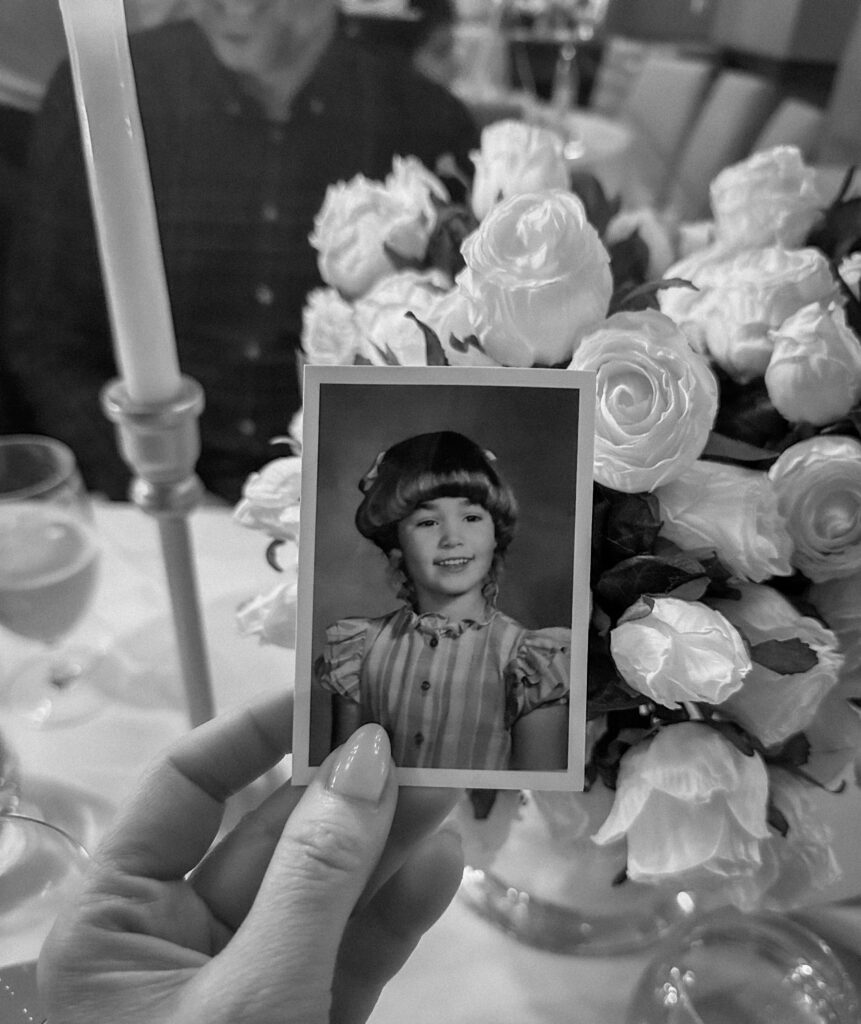
Lately, I’ve been thinking a lot about who I’m actually trying to please. And I’ve realized there are really only two people whose opinions matter: the eight-year-old version of me and the eighty-year-old version of me. The little girl who just wanted to feel safe, loved, and proud of herself. And the older woman who has lived enough life to know what truly matters and what never did.
Honestly, I think they’d give me very similar advice. Slow down. Don’t carry what isn’t yours. Be present for the moments that won’t come back. And if I’m being honest, it’s the eighty-year-old version of me I need to listen to most. She’s not impressed by busyness or constant striving. She’s interested in who I loved well. In whether I allowed myself to rest and actually enjoy the time I was given. And I have a feeling she’d gently remind me that I was already doing enough.
My Wish for 2026
What I want, more than anything, is to end my days differently. To crawl into bed without the familiar knot of guilt or anxiety. To stop replaying what I didn’t get to, or who I might have disappointed. To be able to say, with honesty and kindness, that was enough for today Tori, good job.
I don’t believe there’s a finish line where everything is finally handled and everyone is fully taken care of. I do believe there’s wisdom in knowing when to stop. There’s grace in drawing a line and saying, this moment, this effort, this version of me is sufficient.
This year, I want to meet myself where I am. To treat myself the way I would a best friend. With compassion. With perspective. With a steady hand on my own shoulder.
To give myself permission to say:
You did good today.
That was enough.
That’s the energy I’m bringing into 2026. Not less ambition. Not less care. Just more grace, more presence, and the quiet confidence to know when enough truly is enough.
Tell me, do you do a word of the year? What are you choosing this year and why? Tell me in the comments below! Feel free to borrow mine if it strikes a chord. And if you want to choose a word but simply don’t know where to start, keep reading.

How to Choose Your Own Word of the Year
If the idea of a Word of the Year feels simple, that’s because it is. But simple doesn’t mean shallow. When done well, it can quietly shape the way you move through the year, not by adding more rules, but by offering a lens.
This isn’t about picking a trendy word or choosing something that sounds aspirational. It’s about naming what you actually need.
Here’s a framework to help you find yours.
Step 1: Look Back Before You Look Forward
Before thinking about what you want more of, take a moment to reflect on the year you’re leaving behind.
Ask yourself:
- Where did I feel most stretched or depleted?
- What patterns kept showing up that I’m tired of repeating?
- When did I feel most at peace, most like myself?
- What carried me through the hardest moments?
Often, your word reveals itself in contrast. It lives in the tension between what was hard and what you’re craving now. I need my Word of the Year now more than ever, which makes me excited for the days ahead.
Step 2: Identify the Undercurrent
Instead of focusing on goals, pay attention to the feeling beneath them.
Rather than “I want to be more productive”, ask:
- What am I actually longing for underneath that?
- Is it calm? Confidence? Freedom? Stability? Enough?
Your word should address the root, not the symptom.
Step 3: Let the Word Be a Boundary, Not a To-Do
A good Word of the Year doesn’t demand more from you. It offers guidance. I’ve chosen words in the past that have felt impossible to reach. For instance, one year I chose boundaries, but in my line of work (where my life literally is my work), that word felt pretty silly in retrospect.
Test potential words by asking:
- Does this word create more pressure, or more clarity?
- Would this help me make decisions when things feel overwhelming?
- Could I use this word to know when to say yes and when to say no?
If the word feels heavy or performative, it’s probably not the right one.
Step 4: Define What the Word Means For You
Once a word surfaces, take a few minutes to define it in your own language.
Try finishing these sentences:
- This year, [my word] means…
- When I’m living in alignment with this word, my days will look like…
- When I’m drifting away from it, I’ll notice…
This turns the word from an idea into a lived practice.
Step 5: Return to It Often
You don’t need to write your word on a vision board or announce it publicly unless you want to. Sometimes it’s enough to keep it close. I print mine out and frame it to live beside my computer where I start every day.
Let it be a quiet check-in:
- Is this choice aligned with my word?
- Do I need more of it right now or less?
The power of a Word of the Year isn’t in perfection. It’s in permission.
Permission to pause.
Permission to recalibrate.
Permission to live this season with a little more intention and a little more kindness toward yourself.
And sometimes, that’s more than enough.
With love,
Tori









That was Amazing information Tori!! I love this concept. Thank you so much for sharing this. I really feel like enough should be my word.
You do soooo much and share so much content. You are such a gift for so many of us. Your posts like this are written so eloquently!!
That alone is such a gift. I really
look forward to all your posts. You are so beautiful inside and out. How you do all that you do.. all the while having a chronic illness is so awesome!!
Thank You 💜💜💜
Thank you for your sweet message Jan. It warmed my heart. I’m so glad the word enough resonated with you. And just in case you need the reminder again today… you are enough!